


Something I believe very strongly, mostly from observing changes in myself, is that, once you’ve shoved your own hands deep in the entrails of a building, you’ve permanently altered your entire relationship with the world.
— Kendric Tonn
Consider knowledge and contemplation to be senses, like sight or touch. They register feelings, they play upon us, they are sensual, they contribute to pleasure.
Like the other senses, it must be possible to develop them.
i.
There is a Chinese expression, to have ink in the stomach1. I love the viscerality of the metaphor. The more copiously you read, the more each text will reveal hidden details in the other texts, the more you understand the whole — of a subject, an era, a poetry, the art of storytelling or of life. There is an accumulation of depth. When this accumulation is easy to describe we call it knowledge. When it’s more difficult we might say it builds intuition, which is like the accumulated muscle-memory of memory.2 There are some things you can only grasp at long distances, with a belly full of ink.
This goes beyond reading. Kendric is right, contending with the innards of a building will change you. Trying to fix something large and physical, like a house or an engine, expands your understanding of the world. You start to notice materials in every inch of your environment, you wonder how things are made, you study more, and you start to see through walls.
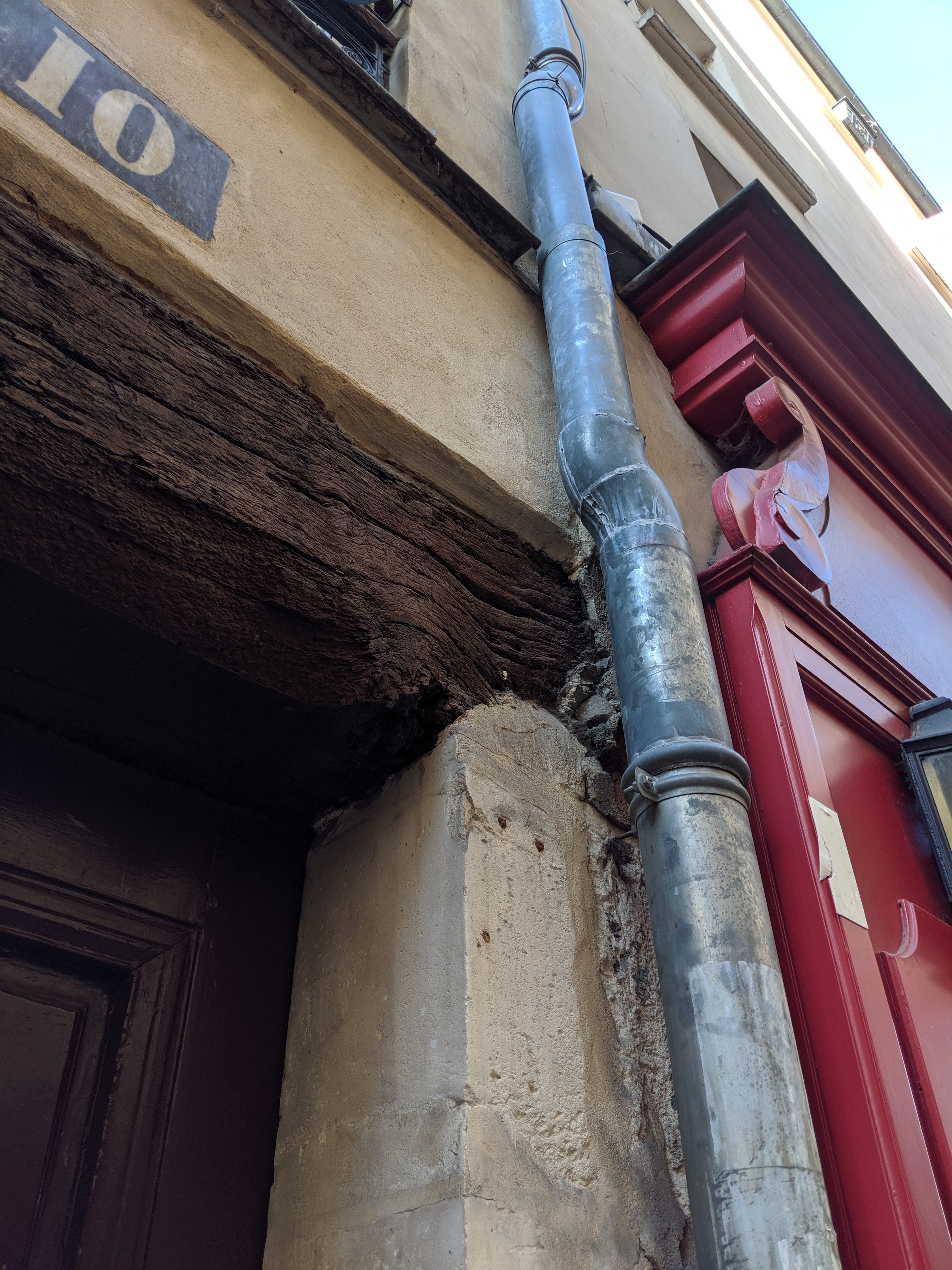
Over time you grasp the difficulty in making (or repairing) these things, and it gives a different light to the world. It becomes easier to respect everything. The world is an accumulation of human sweat. The knowledge becomes one of your senses, the world becomes more gratifying, you discover new pleasures. It becomes hard to walk by a doorway such as this. It’s no longer just a doorway.

ii.
There is sometimes a temporary disenchantment that follows discovery. We meet someone new or find some new place and become infatuated. But after some time we realize that the city we longed to live in is in fact just a city, or some unattainable girl or boy - so hard to get their attention before - is not so otherworldly after all.
This delusion is often our fault. People or places exist in our minds first as a projection of our desires, and only later as the real thing. First we shed the projection, and here many people stop. But if you persist you might find that there is no such thing as “just a city”, there is an endless collection of secrets to be discovered, and the same with people. It is our fault if we crave novelty, forget detail, and then find only surface, unstudied pleasures.
iii.
Many people live as if they are having one night stands with their environment. Novelties can become awfully similar.
iiii.
After a decade of taking photos more and less, I mostly regret taking too few. I adore the accumulation of photographic memory that they provide me, they become an indispensable aid for remembering, a way to access specific months or years. They are a kind of ink in my stomach.
Of course this happens without photographs, too. Pleasures accumulate anywhere you can build attention to detail. If you love someone long enough, if you cultivate attention in each other for years, you will reap the harvest of sweet memories in common.
Some events can only be understood in the moment, but others can only really be understood long afterwards. There is a great pleasure to understanding these things in retrospect, a kind of long distance pleasure.
~ ~ ~
This post is a continuation of Viscerality
The top painting The Ponte Salario, 1775, by Hubert Robert
Kendric Tonn is an oil painter from Ohio
“harvest of sweet memories in common” — from Middlemarch
I have no idea how common this expression is. https://www.cchatty.com/idiom/119176
see also In Praise of the Gods where I mention reading stories as a way to build intuition:

Ah yes, this is really nice. it helps me understand something I’ve been doing for several years now: learning to maintain and repair cars. I’ve always loved cars, but from the outside, as objects of beauty and as thrill rides (I like to drive on race tracks when I can). But when I retired, I knew I wanted to go deeper, to learn how cars were put together and to physically engage with them, get inside the engineering. The car I work on most now—a 10-year old Porsche—is teaching me a lot about the quality of engineering. I’m trying to build up ink in my stomach, I believe.
Lovely meditation.